By SemperScreen®. We made the permanent sink screen for our own rental buildings in Southern California before we ever sold one.
To keep food in the drain from turning into a clog, put a screen over the drain opening, scrape plates into the trash or compost, and never pour grease down the sink. EPA reports that grease is the most common cause of reported sewer blockages, at 47 percent, because it hardens and narrows the pipe. [1] A screen that can't be removed, especially in a rental, keeps catching food scraps on the days the scraping habit slips. It won't stop liquid grease, which is why the other six steps below still matter.
What happens when food goes down the sink drain?
Food that goes down the sink drain either stays in your pipes or travels on to the sewer. In the pipes, the grease that comes with it cools, sticks to the pipe wall and catches the next scraps that come along, until water stops moving. [1] Clearing that line means a plunger, a snake or a service call. In our own buildings, we figure a drain service call at $250+ per call, and clearing the line doesn't change what goes down the sink next week.
In the sewer, it's still wasted food. EPA's Wasted Food Scale puts sending food down the drain in its least-preferred tier, alongside landfilling and incineration. [2] The scale ranks environmental impact, and EPA notes it doesn't weigh economic and social factors.
Some foods cause far more trouble than others. Our list of the top 10 foods that cause clogged drains explains why each one is a problem.
How do you stop food from going down the sink drain?
Work through these seven steps in the order we'd put them in a building. The first one does most of the work, because it doesn't depend on anyone remembering anything.
1. Install a permanent sink screen
Stop food at the drain opening, before it enters your plumbing.
Pop-out baskets only protect the drain while they're in it. Once one comes out for emptying and doesn't go back, food goes straight down. A garbage disposal grinds food smaller and sends it down the drain anyway.
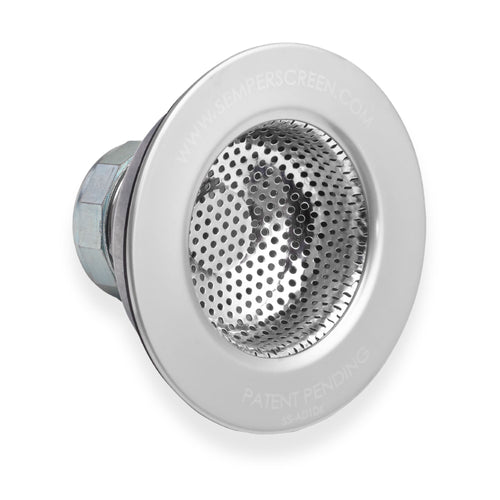
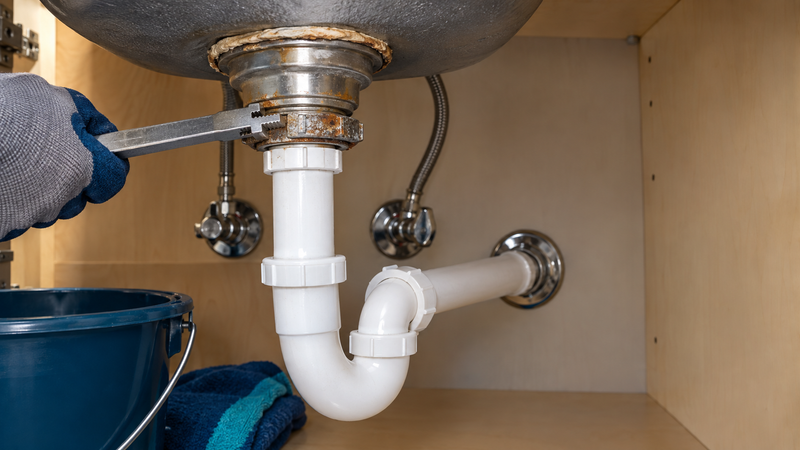
The SemperScreen® permanent sink screen replaces the whole kitchen sink drain assembly with one stainless part that has the screen built in, so there's nothing to lift out. It fits standard 3½" kitchen drains and takes about 15 minutes per drain as a retrofit, with no plumbing modifications. It catches food scraps down to grains of rice. By our own numbers, it pays for itself within the first prevented service call, typically 30 to 90 days.
- Polished 304 stainless steel, with a 0.08 in (2.0 mm) screen aperture
- Occupants can't remove it, so it can't go missing
- Cleaning means scooping what's caught into the trash or compost
- Certified to ASME A112.18.2-2020 / CSA B125.2-20
- Lifetime residential, 5-year commercial warranty (rentals count as commercial)
We built it after buying a 33-unit, 1960s apartment building in Los Angeles whose cast iron drain lines ran under a concrete slab. Replacing them wasn't realistic, so we had to control what went down the kitchen sinks. How it works shows the screen and how it fits your sink.
2. Compost food scraps
Composting keeps food scraps out of the drain entirely. On EPA's Wasted Food Scale, composting ranks above sending food down the drain. [2]
EPA's home composting guide lists these as compostable: [3]
- Fruit and vegetable scraps
- Coffee grounds and filters
- Tea bags
- Eggshells
It also lists what to keep out of a home pile, including meat and fish bones, dairy, fats, grease and oils, and pet waste. [3] Those go in the trash, not the sink.
For property managers: put a small scrap bin in each unit or a shared bin in common areas, and include the instructions in the move-in packet.
3. Rethink the garbage disposal
A disposal makes food smaller, but it still sends it down the drain, the pathway EPA's scale ranks lowest. [2] It also needs running water every time it's used, and it's one more motor under the sink to repair or replace.
Many owners now take disposals out at unit turn. Landlords should first check whether a garbage disposal can be removed from a rental. What to install after removing a garbage disposal compares the options for the drain that's left. SemperScreen® recommends that you always refer to local building codes when modifying a building's plumbing system.
4. Keep grease out of the sink
Fats, oils and grease (FOG) reach the drain as a liquid, so no screen can stop them. North Carolina's "Grease Goblin" guidance for kitchens says it plainly: don't pour grease down the drain, and don't use the sink to get rid of food scraps. [4]
- Let grease cool and harden in the pan
- Scrape it into a sealed container
- Throw the container in the regular trash
- Wipe greasy pans with a paper towel before washing
For property managers: put grease disposal instructions in the lease and the move-in walkthrough, and hand out a small grease container at move-in.
5. Use enzyme treatments as maintenance only
Some owners add a monthly enzyme drain treatment. If you do, follow the label, use it overnight when the drain isn't in use, and treat it as a supplement to the other steps. An enzyme product isn't a fix for a line that's already blocked. For that, call a plumber.
6. Install grease interceptors where the kitchen is busy
Grease traps and interceptors matter most in commercial kitchens and any property with heavy food prep, such as senior living dining rooms or shared student kitchens. They hold grease on site so it doesn't reach the sewer, and they need regular servicing. [1] Many local sewer authorities set grease rules for food service, including interceptor requirements. [1] Running one already? See how to cut grease interceptor pump-out frequency at the sink.
7. Teach occupants, but don't rely on it
Education helps, but on its own it's unreliable. Workplace safety uses the same logic: NIOSH's hierarchy of controls ranks engineering controls above administrative controls such as training, because they don't depend on people doing the right thing every time. [5] The North Carolina kitchen guidance concedes that dry cleanup "is dependent upon the behavior of the employee." [4]
What to teach:
- Scrape plates into the trash or compost before rinsing
- Never pour grease, coffee grounds, rice or pasta down the sink
- Scoop out the sink screen when debris collects
- Report slow drains right away
Put it in the move-in packet, the lease, and a small sign by the kitchen sink.
Which step should you start with?
Start with the screen, because it keeps working on days the habits slip. Then layer in the rest. Each step covers a different gap: the screen catches the scraps that reach the drain, composting gives people somewhere else to put them, grease rules handle what a screen can't, and interceptors protect the sewer in busy kitchens.
| When | Homeowner | Rental or property team |
|---|---|---|
| This week | Install a screen on the sink that clogs. Keep a grease jar by the stove. | Install screens at each unit turn. Hand out grease instructions. |
| Next 1 to 3 months | Start a scrap bin or compost. | Decide on disposals as they fail. Add composting where pickup exists. |
| Ongoing | Scoop the screen as needed. | Track drain tickets by unit and refresh occupant reminders. |
For a property team tracking the results, how to reduce clogged drain maintenance tickets in a rental property covers the numbers to watch.
Taking action
Pick the step you can put in place this week. For most kitchens, that's the screen.
For your own kitchen, start with the SemperScreen® permanent sink screen. For rental buildings, hotels and facilities, we know you have at least one drain that keeps clogging. Ask about a pilot in your worst drain, or call 1-855-963-5884.
Frequently asked questions
Does plumbing code say a sink screen has to be removable?
Where the International Residential Code is adopted, a sink in a one- or two-family home needs a device at its waste outlet that restricts the clear opening, and the code names a crossbar or other device among the options. The section doesn't say that device has to be removable. [6] SemperScreen® recommends that you always refer to local building codes when modifying a building's plumbing system.
My kitchen sink is already clogged with food. What should I do first?
Clear the blockage first, because a screen protects a clear line and won't clear what's already in it. If the sink has a disposal that keeps clogging, read why a disposal keeps clogging and when to stop fixing it. Once the line runs clear, a permanent sink screen keeps new scraps out.
Can tenants or guests remove a SemperScreen® permanent sink screen?
No. The screen is part of the drain body, so occupants can't remove or lose it. The assembly still installs and services with standard tools, so a plumber can work on the drain when needed.
Someone in my home keeps putting food down the sink. What can help?
A permanent sink screen stops food scraps at the drain opening no matter who is at the sink. If a garbage disposal is involved, read should you disconnect the garbage disposal for someone with dementia before you decide.
References
- U.S. Environmental Protection Agency, Office of Water. "Controlling Fats, Oils, and Grease Discharges from Food Service Establishments." National Pretreatment Program (40 CFR 403), EPA-833-F-12-003, September 2012. epa.gov
- U.S. Environmental Protection Agency. "Wasted Food Scale." Sustainable Management of Food. epa.gov
- U.S. Environmental Protection Agency. "Composting At Home." epa.gov
- North Carolina Department of Environment and Natural Resources, Division of Pollution Prevention and Environmental Assistance. "Grease Goblin" FOG Best Management Practices, DPPEA-FY00-08, as published in the Salisbury-Rowan Utilities FOG Control Program. salisburync.gov
- National Institute for Occupational Safety and Health. "Hierarchy of Controls." cdc.gov
- International Code Council. International Residential Code, § P2714.1, Sink waste outlets (2018, 2021 and 2024 editions). up.codes